Across many commercial agricultural operations, declining well production directly affects crop yields, livestock capacity, and long-term expansion plans. As drilling costs rise, the margin for error in water decisions becomes significantly smaller.
Explore Common Agricultural Water Challenges
Across farming and ranching regions, operators face several common groundwater problems — from declining well production to uncertainty about where new wells should be drilled.
The guides below explain the most common water challenges affecting agricultural operations and how landowners can better understand groundwater conditions beneath their property.

Why Wells Lose Production
Why wells decline over time and how to reduce the risk of drilling another low-yield well.

Avoiding Dry or Low-Production Water Wells
How to reduce the risk of costly drilling failures.

Why Locating Groundwater Is Difficult
Why productive water zones are hard to identify beneath a specific property.

Why New Water Wells Sometimes Fail
Why some new wells produce little water and how to avoid costly drilling mistakes.

How Much Water Is Really Under Your Land?
Questions to ask before drilling, buying property, or expanding operations.

How Farm Water Demand Grows Over Time
How to plan groundwater capacity before expanding your farm or ranch.

How Drought Changes Groundwater Availability
Understand groundwater conditions before drilling a new well.

How Nearby Wells Can Affect Your Water Supply
Understand how neighboring pumping can reduce groundwater production.

Why Some New Wells Produce Less Water Than Expected
And how to avoid repeat drilling failures.
The Cost of Delaying Water Decisions
How waiting too long to evaluate groundwater can increase financial risk.
Why Water Challenges Are
Becoming More Common
Groundwater systems are dynamic. Over time, factors such as long-term pumping, drought cycles, regional development, and changing recharge patterns can alter how much water is available — and where it can be accessed.
Many operations are discovering that approaches that worked years ago are no longer reliable under today’s conditions. Understanding what’s happening beneath your land is often the first step toward protecting productivity, planning growth, and reducing financial risk.
How AquaterreX Helps Reduce Water Uncertainty
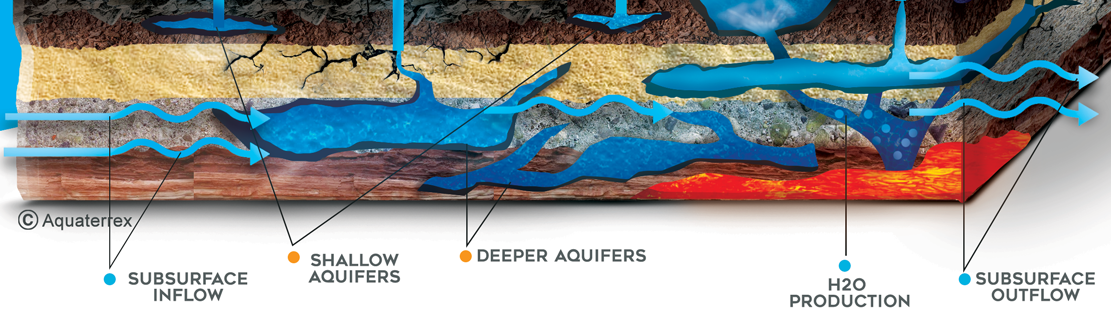
AquaterreX supports agricultural landowners by helping them understand groundwater potential before major investments are made. By combining advanced geospatial analysis, subsurface data, and field verification, AquaterreX provides insight into where viable water may exist, how deep it is likely to be, and whether it is suitable for long-term use.
The goal is not to replace experience or local knowledge, but to complement it with data — allowing water decisions to be made with greater confidence and lower risk.
Advanced Geospatial Analysis
We use satellite imagery, geological data, and proprietary algorithms to map subsurface water potential across your land
Subsurface Data Integration
By combining multiple data sources, we build a comprehensive picture of what lies beneath — including aquifer depth and viability.
Field Verification
Our analysis is validated through on-site assessment, ensuring recommendations are grounded in real-world conditions.
Start With Understanding
If you’re facing uncertainty about your water supply, exploring the challenges above is a practical place to begin.
When you’re ready, AquaterreX can help assess groundwater conditions beneath your land before you drill.