WATER CHALLENGE
Why Your Water Wells Aren't Producing Like They Used To
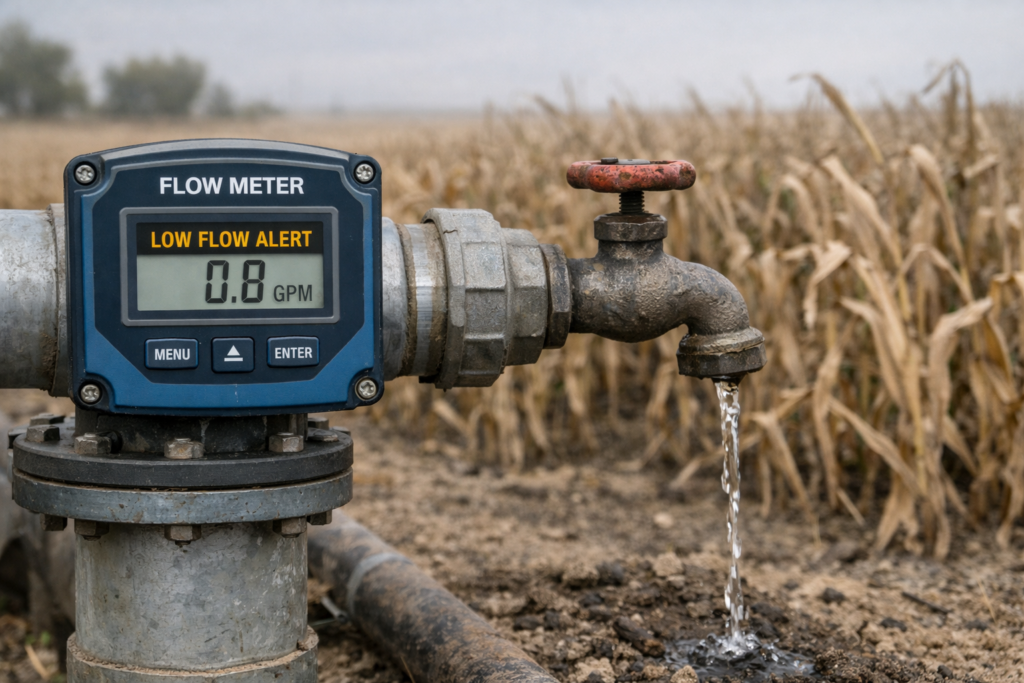
Across farming and ranching regions, many landowners are seeing reduced or inconsistent production from existing water wells that once met their needs. For most commercial operations, the issue isn’t a single well going dry — it’s that multiple wells across a property no longer deliver the volume or reliability they once did.
Understanding why this happens is the first step toward deciding what to do next.
For many operations, reduced well performance directly impacts crop yields, livestock capacity, and long-term expansion plans.
Why Water Wells Lose Production Over Time
Declining well performance is rarely caused by a single factor. More often, it reflects gradual changes in subsurface conditions and regional groundwater dynamics.
Common contributors include:
- Long‑term decline of shallow or intermediate aquifers
- Extended drought cycles that reduce recharge
- Increased pumping from nearby agricultural, municipal, or industrial users
- Older well designs that no longer intersect the most productive water-bearing zones
- Shifts in groundwater flow patterns over time
In many cases, declining production is connected to broader groundwater conditions that affect how wells perform across a region.
Understanding where groundwater is located beneath a specific property can help explain why some wells continue producing while others decline.

This leads to an important insight:
In many cases, the water still exists — just not in the same places or quantities older wells were designed to access.
The challenge is identifying those zones before committing to another major drilling expense.
Why Simply Drilling Another Well Can Be Risky
When production drops, a common response is to drill an additional well or go deeper in an existing location. While this approach sometimes works, it also introduces risk.
Without understanding subsurface conditions, drilling can result in:
- Dry holes
- Low‑yield or inconsistent production
- Encountering saline or poor‑quality water
- Significant cost without solving the underlying problem
In many regions, operators report drilling multiple underperforming or dry wells before seeking additional analysis.
For operators trying to avoid drilling another dry or low-production well, understanding subsurface conditions before drilling can significantly reduce risk.
As groundwater conditions become more complex, the cost of uncertainty rises.
Traditional Methods and the Role of Certainty
Many agricultural operators rely on traditional approaches — including water witching, local knowledge, and experienced drillers — to guide drilling decisions. In some cases, these methods do lead to water, particularly in regions where groundwater is relatively shallow or widespread.
However, traditional methods generally do not provide detailed information about how deep the water is, how much water is available, or what the quality of that water will be.
Traditional methods may help suggest general areas where water might be found, but they rarely provide the level of detail needed to make confident decisions about drilling locations.
As drilling costs rise and margins tighten, the question often becomes less about whether traditional methods can work and more about how much certainty they provide before a major investment is made.
Shallow vs. Deeper Groundwater Systems
Most older agricultural wells target shallow or intermediate aquifers that historically produced sufficient water. These systems recharge more quickly but are also more vulnerable to long‑term depletion.
Deeper, confined groundwater systems behave differently. When properly identified and managed, they may offer:
More stable long‑term supply
Reduced interference from nearby wells
Protection from surface contamination
The challenge is determining whether these deeper systems exist beneath a specific property — and whether they are viable — before drilling.
Practical Next Steps When Production Declines
When existing wells no longer meet operational needs, landowners typically consider three paths:
Reduce usage and limit operations
Drill additional wells and accept the risk
Assess subsurface conditions before drilling again
This approach focuses on understanding groundwater conditions first, allowing decisions to be made with greater confidence and lower financial risk.
Many of these issues are also explored across other common agricultural water challenges landowners face today.
How AquaterreX Supports Informed Water Decisions
AquaterreX helps agricultural landowners better understand groundwater potential beneath their property before drilling.
AquaterreX has recently completed 30 consecutive projects with confirmed water discoveries across multiple regions.
Our process combines geospatial analysis, subsurface data, and on‑site field verification to:
Identify promising water‑bearing zones
Estimate depth, thickness, and potential yield
Determine whether fresh, non‑saline water is likely present
Pinpoint optimal drilling locations
This data‑driven approach complements traditional knowledge by reducing uncertainty — especially where the cost of failure is high.
FAQs
Reduce Uncertainty Before Your Next Water Investment
If your existing water wells are no longer producing like they used to, the most important step is understanding why — and what options truly exist beneath your land.
Learn how AquaterreX helps landowners assess groundwater potential before drilling.