WATER CHALLENGE
How Drought Changes Groundwater Availability
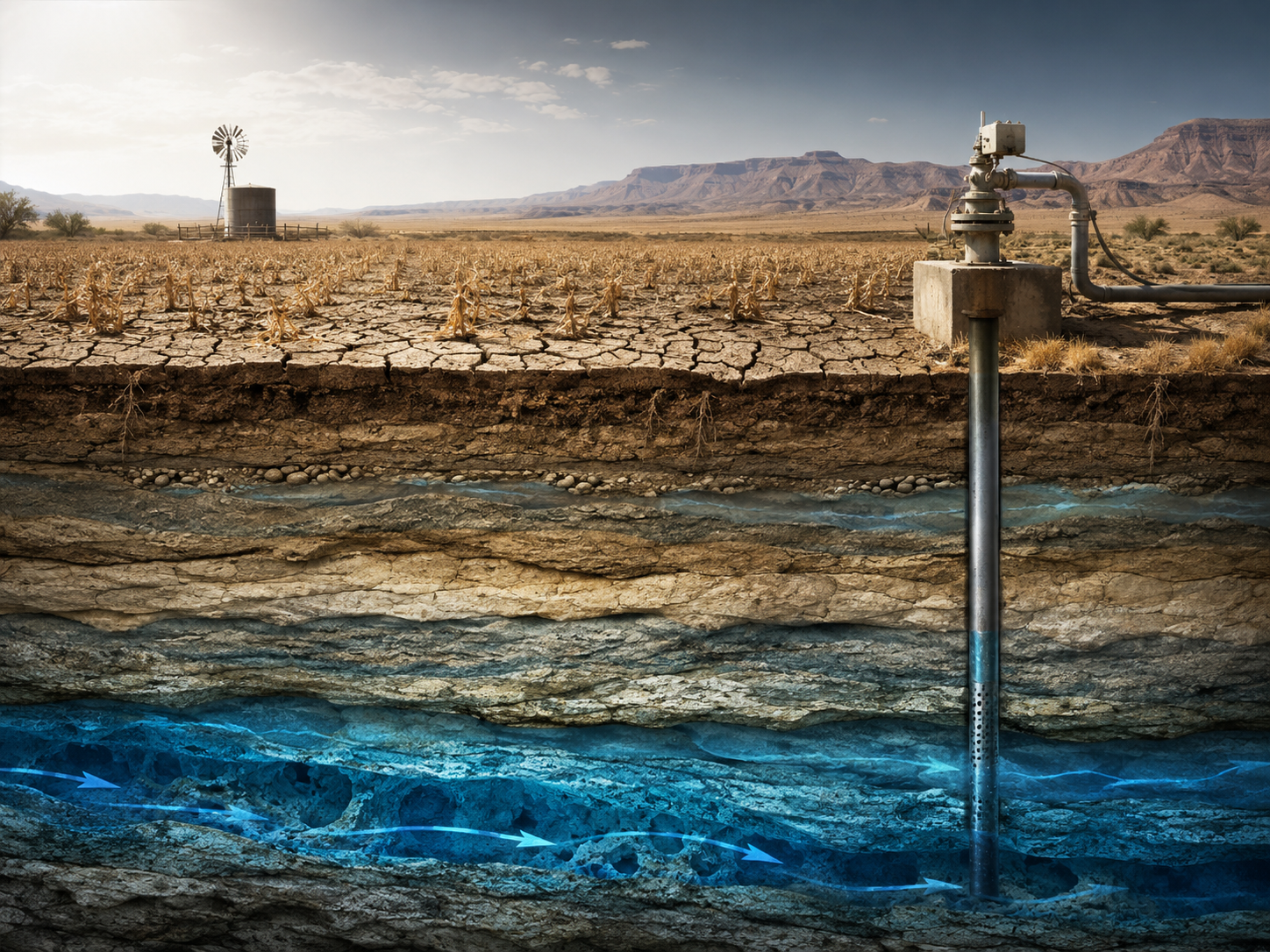
Extended droughts can dramatically affect groundwater systems, but not always in obvious ways. These patterns often appear first when water wells begin producing less water than they once did.
While rainfall declines immediately impact surface water, groundwater systems often respond more slowly. Over time, reduced recharge combined with increased pumping can lower aquifer levels and reduce well productivity across entire regions.
Understanding how drought influences groundwater is critical for farms and ranches that rely on wells for irrigation and livestock operations.
How Drought Groundwater Conditions Change Over Time
Groundwater systems are connected to long-term climate patterns. When drought conditions persist for multiple seasons or years, several changes can occur underground.
Common impacts include:
- Reduced natural aquifer recharge
- Increased groundwater withdrawals by agriculture and municipalities
- Lower regional water tables
- Greater competition between nearby wells
- Declining production from older or shallow wells
These effects may appear gradually but can significantly change water availability over time.
Drought conditions may also amplify the impact of nearby wells drawing from the same aquifer system.

This leads to an important insight
Even when drought reduces recharge, significant groundwater resources may still exist deeper or in different formations beneath a property.
The challenge is identifying those zones before committing to expensive drilling.
Why Simply Drilling Deeper Doesn't Always Work
A common response to drought-related declines is to drill deeper wells. In some situations this helps, but it does not guarantee success.
Without understanding subsurface geology, drilling deeper may still encounter:
- Low-yield formations
- Saline or mineralized water
- Thin or discontinuous aquifers
- Significant drilling costs with uncertain results
As groundwater systems become stressed during drought cycles, the financial risk of drilling increases.
Traditional Methods and the Role of Certainty
Many agricultural operators rely on traditional approaches — including local knowledge, experienced drillers, and in some regions water witching — when drought begins to reduce well output.
In some cases, these methods can still lead to water, particularly where groundwater is relatively shallow or widely distributed.
However, during prolonged drought cycles, groundwater systems often become more stressed and less predictable. Traditional methods generally do not provide detailed information about how drought has affected recharge, where the most productive formations remain, or whether deeper groundwater is still fresh and usable.
Traditional methods may help suggest general areas where water might be found, but they rarely provide the level of detail needed to make confident drilling decisions during drought conditions.
As drought persists and drilling costs rise, the question often becomes less about whether traditional methods can work and more about how much certainty they provide before another major investment is made.
How Groundwater Systems Respond to Drought
Groundwater success during drought often depends on:
Accessing deeper confined aquifers
(Some deeper systems respond more slowly to drought)
Understanding regional recharge patterns
(Long-term sustainability matters more than short-term yield)
Targeting the most productive formations
(Location precision matters more than drilling depth)
The challenge is understanding how drought has changed groundwater conditions beneath a specific property — and where reliable water may still be available before drilling again.
Practical Next Steps When Drought Reduces Well Output
When groundwater production declines during drought periods, landowners typically consider several options.
Reduce water usage or scale operations
Drill additional wells and hope conditions improve
Assess subsurface conditions before drilling again
Understanding groundwater systems before drilling allows decisions to be made with greater confidence and lower financial risk. Understanding how groundwater can be located beneath a specific property becomes even more important during drought cycles.
How AquaterreX Helps Reduce Drought Risk
AquaterreX helps agricultural landowners better understand groundwater conditions beneath their property before drilling new wells.
Our process combines geospatial analysis, subsurface data, and on-site field verification to:
Identify promising water-bearing formations
Estimate potential yield and sustainability
Determine whether fresh groundwater is likely present
Pinpoint optimal drilling locations
This approach helps reduce uncertainty — particularly during drought conditions when groundwater decisions become more critical.
FAQs
Reduce Uncertainty Before Your Next Water Investment
If your existing water wells are no longer producing like they used to, the most important step is understanding why — and what options truly exist beneath your land.
Learn how AquaterreX helps landowners assess groundwater potential before drilling.