WATER CHALLENGE
How Neighboring Wells Can Affect Your Water Supply
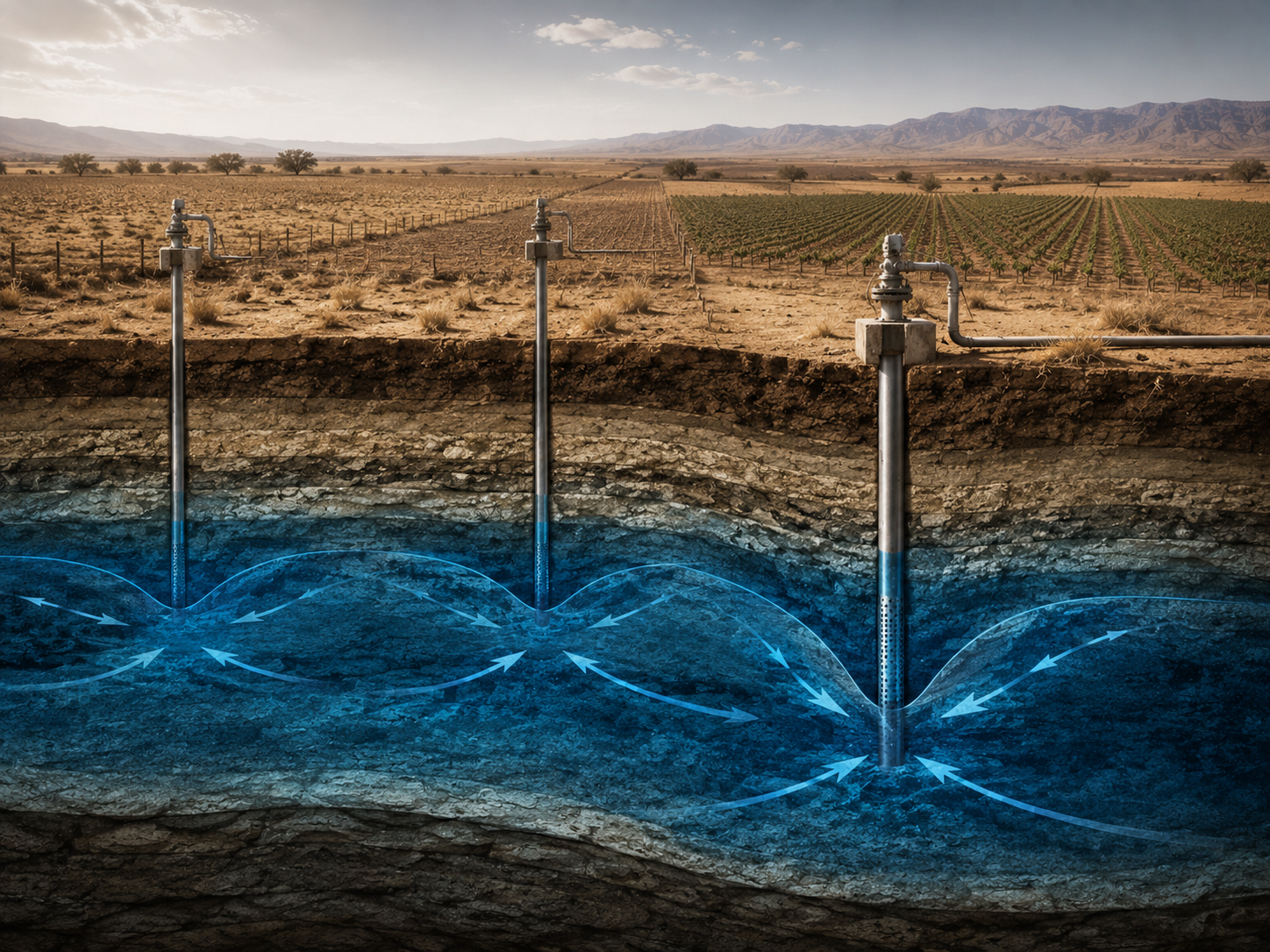
In many agricultural regions, groundwater is not drawn from a single well alone. Instead, multiple wells across farms, ranches, and nearby communities often tap into the same aquifer systems.
When pumping increases across a region, the performance of individual wells can change — even if nothing about the well itself has changed.
Understanding how neighboring wells influence groundwater levels is an important step in protecting long-term water reliability.
Why Wells Sometimes Decline When Nearby Pumping Increases
Groundwater aquifers are shared systems. When multiple wells draw water from the same formations, pumping in one location can influence water levels in surrounding areas.
Common factors include:
- Increased irrigation pumping by nearby farms
- Municipal groundwater withdrawals
- Industrial water use
- Clusters of new wells drilled in the same aquifer
- Long-term regional groundwater depletion
In some cases this occurs in the same regions where water wells gradually lose production over time. Over time, these pressures can reduce water levels and change how wells perform.

This leads to an important insight
In many cases, declining well production is not caused by a single well failing — but by changes in groundwater conditions across an entire region.
The challenge is identifying whether nearby pumping is influencing a property's water supply before drilling another well.
Why Simply Drilling Another Well May Not Solve the Problem
When well production declines, drilling an additional well may seem like the logical next step. However, if the underlying aquifer is already experiencing pressure from nearby pumping, the new well may face the same limitations.
Without understanding regional groundwater conditions, drilling may result in:
- Wells that compete with each other for the same water
- Lower production than expected
- Increased pumping costs
- Wells that decline quickly over time
Understanding how groundwater can be located beneath a specific property can help reduce these risks.
As groundwater demand increases, understanding aquifer dynamics becomes more important before drilling.
Traditional Methods and the Role of Certainty
Many agricultural operators rely on traditional approaches — including local knowledge, experienced drillers, and in some regions water witching — when deciding where to drill a new well.
In some cases, these methods can still lead to water, particularly where groundwater is relatively shallow or broadly distributed.
However, traditional methods generally do not show how nearby pumping may be affecting an aquifer, whether multiple wells are drawing from the same formation, or how groundwater pressure may be changing across a region.
Traditional methods may help suggest where water might be found, but they rarely provide the level of detail needed to understand how neighboring wells may influence long-term well performance.
As drilling costs rise and regional pumping pressure increases, the question often becomes less about whether water exists and more about how much certainty there is before investing in another well.
Understanding Shared Aquifer Systems
Groundwater success often depends on understanding how aquifers behave across an entire region — not just beneath one property.
Important considerations include:
Aquifer connectivity
(Some wells may draw from the same underground formations)
Regional pumping pressure
(Heavy irrigation or municipal pumping can influence groundwater levels)
Formation thickness and recharge
(Productive zones may vary across short distances)
The challenge is determining how these factors affect groundwater beneath a specific property.
Practical Next Steps When Wells Compete for the Same Water
When well production declines due to regional pumping pressure, landowners typically consider several options.
Reduce pumping or adjust irrigation practices
Drill additional wells and accept the risk of competition
Evaluate subsurface groundwater conditions before drilling again
Understanding how aquifers behave across a region helps reduce uncertainty and guide better drilling decisions.
How AquaterreX Helps Identify Reliable Groundwater Zones
AquaterreX helps agricultural landowners better understand groundwater potential beneath their property before new wells are drilled.
Our approach combines geospatial analysis, subsurface data, and on-site field verification to:
Identify productive water-bearing formations
Evaluate aquifer depth and thickness
Estimate potential yield and sustainability
Pinpoint optimal drilling locations
This data-driven approach helps reduce the uncertainty created by regional pumping pressures.
FAQs
Reduce Uncertainty Before Your Next Water Investment
When groundwater conditions change across a region, understanding what is happening beneath your property becomes critical before drilling another well. These interactions are part of the broader water challenges facing agricultural landowners.
Learn how AquaterreX helps landowners assess groundwater potential before drilling.