

Why This Guide Matters
Water problems on farms and ranches rarely begin as a single dramatic event. More often, they develop gradually.
A well that once produced reliably starts producing less. Pumping takes longer. Irrigation becomes harder to manage. Livestock water planning gets tighter. Expansion starts to feel risky.
A landowner hears about a neighbor drilling deeper — or drilling again — and starts wondering whether the same decision is coming.
That is why this guide exists.
Across agricultural regions, many operators are dealing with the same underlying issue:
Growing uncertainty about groundwater.
In some places, drought is a factor. In others, the problem is regional pumping, changing aquifer conditions, or wells that no longer intersect the most productive zones.
In many cases, it is a combination of all of the above.
This guide helps farmers, ranchers, and landowners understand:
- Why water problems are increasing
- Why older assumptions about wells do not always hold
- Why drilling another well can be risky
- How groundwater conditions vary across a property
- What water uncertainty can cost an operation over time
- How to make more informed decisions before investing in another well
This guide is not meant to replace local expertise, hydrological judgment, or drilling experience.
It is designed to give you a clearer framework for understanding groundwater risk — and making better decisions before investing in another well.
Why Farm and Ranch Water Problems Are Increasing
Water problems are becoming more common because groundwater systems are dynamic — they change over time.
Many agricultural operations were built around wells drilled years or decades ago under very different conditions.
Aquifer recharge patterns may have shifted. Pumping from nearby farms, municipalities, or industrial users may have increased. Drought cycles may have reduced replenishment.
Productive zones may still exist — but older wells may no longer be positioned to access them efficiently.
In other words, today’s water problems are often not caused by water disappearing — but by changing subsurface conditions.
To better understand how groundwater systems change over time, this short video provides helpful context:
Groundwater systems are dynamic. Changes below the surface can affect how and where water is accessed over time.
This matters because a well can still be mechanically sound while becoming less useful to the operation.
If the problem is underground rather than structural, repairing equipment or drilling nearby without better information may not solve it.
If your situation involves declining production from existing wells, you may also want to review Why Your Water Wells Aren’t Producing Enough Water.
How Groundwater Actually Works Beneath a Property
One of the most common misconceptions about groundwater is that it exists evenly beneath a property.
It does not.
Groundwater moves through formations that can vary significantly across short distances. It may be found in porous rock, fractured zones, confined aquifers, shallow formations, or deeper water-bearing layers. Some parts of a property may contain productive water-bearing zones, while other parts may not. Even when water exists across a region, its depth, thickness, pressure, quality, and recharge behavior may vary widely.
This is why two wells drilled on the same property can perform very differently.
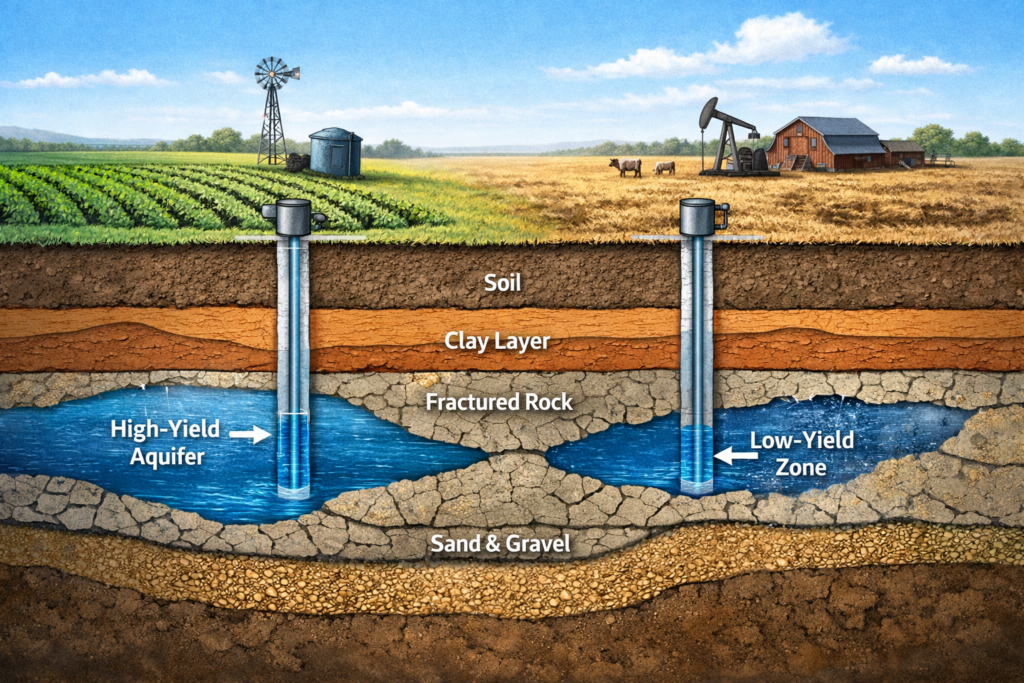
Understanding this variability is critical. It helps explain why:
- one landowner can have an older well that still performs well while another nearby sees decline
- a new well can underperform even when groundwater exists
- and historical well results do not always predict future drilling success
Because these differences exist beneath the surface, identifying productive zones before drilling is critical to reducing risk.
For a deeper explanation of this challenge, see Why Locating Groundwater Is Difficult.
Why Existing Wells Lose Production Over Time
Declining well performance is one of the most common and frustrating water challenges on farms and ranches.
It often develops gradually — and can be easy to overlook at first.
Declining well performance often shows up as:
Lower gallons per minute
Longer fill times
Less reliable irrigation support
Inconsistent output across seasons
Gradual loss of production over several years
Common causes include:
Falling water tables
Changing groundwater flow paths
Nearby pumping pressure
Reduced aquifer recharge
Older wells no longer intersecting the most productive water-bearing zones
In many cases, the well itself is not the problem — the groundwater conditions around it have changed.
A well can remain mechanically sound while becoming less productive over time.
This distinction is critical when deciding what to do next.
If production has dropped because the well no longer reaches the most productive part of the formation, drilling another well nearby without better subsurface understanding may simply repeat the same mistake.
For a deeper look, see Why Wells Lose Production Over Time.
Why Drilling Another Well Doesn’t Always Solve the Problem
When water production declines, landowners often feel pressure to act.
The most natural response is to drill another well.
Sometimes that works.
Sometimes it does not.
The real risk is that drilling decisions are often made under uncertainty.
Without understanding subsurface conditions, drilling can result in:
- Dry holes
- Low-yield wells
- Poor-quality or saline water
- Significant capital spent without solving the problem
When drilling costs are already high, a failed or underperforming well becomes more than a technical issue — it becomes a financial problem.
It can impact cropping plans, irrigation timing, livestock capacity, land value, and long-term operational confidence.
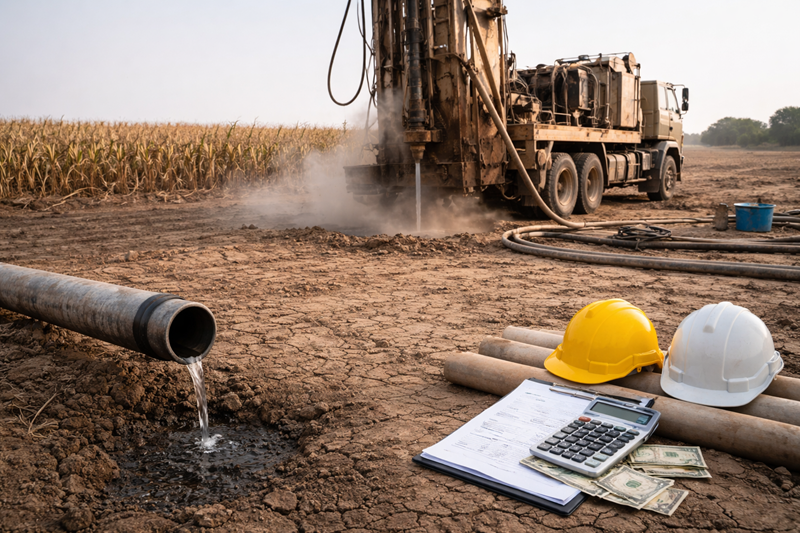
That is why many agricultural operators focus on avoiding dry or low-production wells — not just finding another place to drill.
To explore this further, see:
Why New Wells Sometimes Fail — Even When Water is Present
A new well can fail or underperform — even when groundwater is present beneath the property.
This often happens because the well intersects the wrong formation.
Common reasons include:
- Drilling into thin or discontinuous aquifers
- Missing the most productive fracture zones
- Targeting depth without understanding formation quality
- Relying too heavily on nearby well assumptions
- Drilling in areas where groundwater has shifted over time
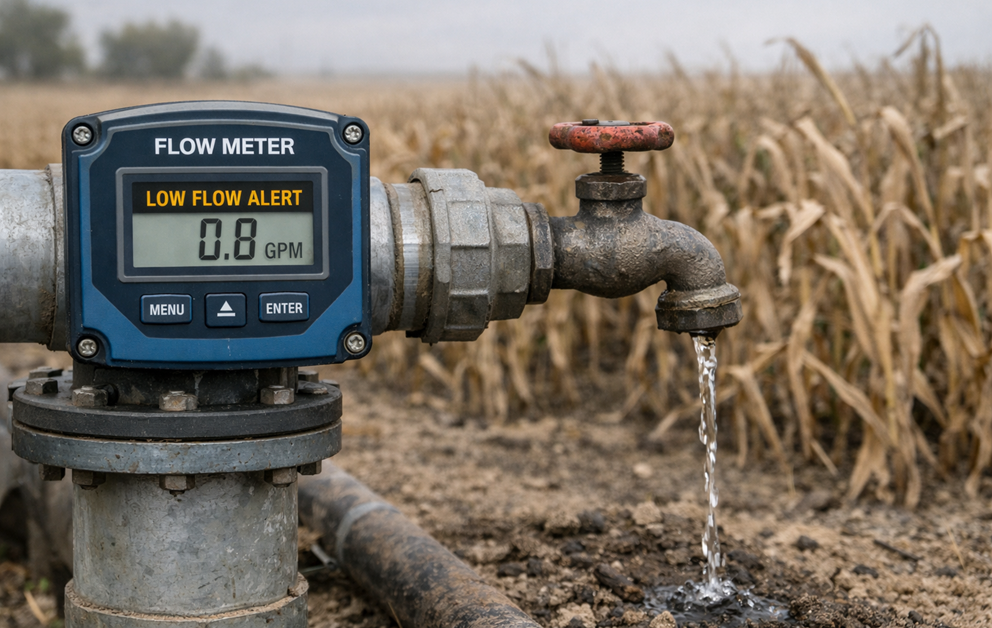
“Water exists in the region” is not enough.
What matters is whether a well intersects a productive, usable, and sustainable water-bearing zone.
This explains why some new wells produce less water than expected — and why others decline quickly after drilling.
If this situation sounds familiar, see Why Some New Wells Produce Less Than Expected.
Traditional Methods — and the Role of Certainty
Agricultural operators often rely on a combination of experience, observation, and local knowledge when making drilling decisions.
This may include:
- local knowledge
- nearby well experience
- driller judgment
- regional memory
- and in some areas, traditional methods like water witching
These approaches can still lead to water — especially in regions where groundwater is shallow or widely distributed.
However, they often cannot provide detailed answers to the questions that matter most when drilling costs are high:
How deep is the productive formation?
How thick is it?
Is the water likely to be fresh and usable?
Will the zone support long-term pumping?
Is the best drilling location actually where surface assumptions point?
As drilling costs rise, the question is no longer:
“Can traditional methods sometimes work?”
It becomes:
“How much certainty do they provide before we invest?”
That is a very different standard — and an increasingly important one for modern agricultural operations.
How Drought Impacts Groundwater — And What It Means for Your Wells
Drought doesn’t always mean water disappears — but it does change how groundwater behaves beneath your land.
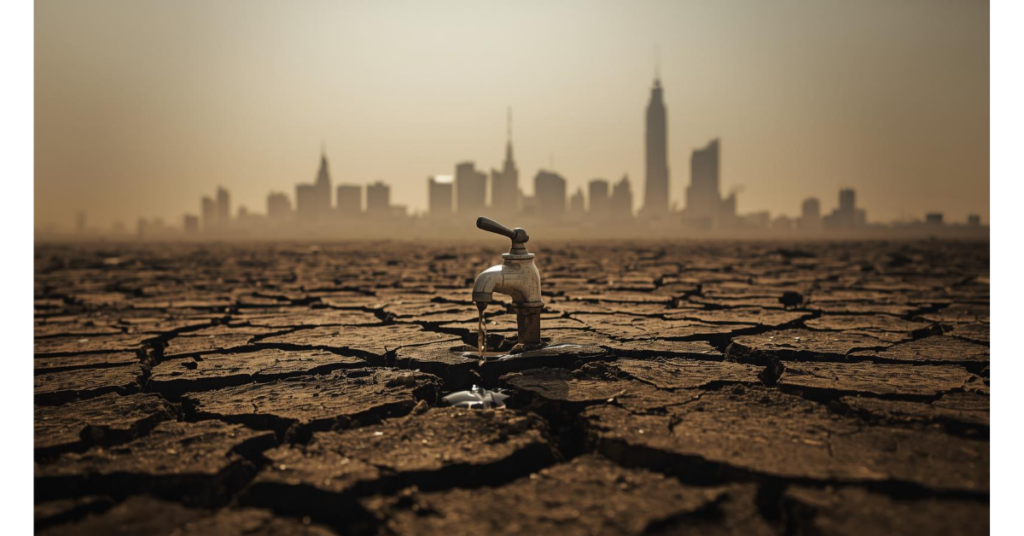
Drought affects groundwater — but often in gradual and less visible ways.
Surface water often responds first to drought. Groundwater responds more slowly.
Over time, prolonged drought can reduce recharge and increase pumping pressure across a region, leading to:
- Lower water tables
- Greater stress on shallow and intermediate aquifers
- Declining output from older wells
- Increased competition for the same water-bearing formations
Drought does not always mean groundwater is gone.
In many cases, usable water still exists — but it may be deeper or located in different formations than older wells were designed to access.
Drought is often most disruptive when it combines with other existing pressures.
If an area already has rising agricultural or municipal demand, reduced recharge can accelerate problems that were already developing.
For a deeper look at this topic, see How Drought Changes Groundwater Availability.
How Nearby Wells Can Impact Your Water Supply
Most groundwater systems are shared.
That means wells on nearby properties can directly affect how your well performs.
This can happen through:
- Increased agricultural pumping within the same aquifer
- Municipal or industrial withdrawals
- Clustering of wells in the same productive zone
- Long-term regional drawdown
Your well does not operate in isolation.
Even if nothing about your well has changed, nearby pumping can reduce pressure, shift flow paths, and impact production.
From a landowner’s perspective, this can feel confusing.
Nothing about your well may have changed — yet production declines anyway.
That’s because your well may be responding to broader regional groundwater conditions, not just what’s happening beneath your property.
This is why well performance cannot always be evaluated in isolation.
If regional interaction may be affecting your well, see How Nearby Wells Can Affect Your Water Supply.
How Much Groundwater Is Under Your Land?
This is one of the most important — and most misunderstood — questions in agricultural water planning.
Many landowners assume the answer should be simple.
It is not.
The answer is not simply “a lot” or “not much.” It depends on several key factors:
- Geology
- Depth of the formation
- Formation thickness
- Recharge potential
- Water quality
- How groundwater is distributed across the property
To better understand why groundwater availability varies so much from place to place, this short video provides helpful context:
Groundwater systems are complex and vary widely depending on geology, depth, and recharge conditions.
A single well does not define a property.
Groundwater conditions can vary significantly across short distances — and one result rarely tells the full story.
This is why evaluating groundwater potential requires more than a single well log or historical result. It requires understanding how water is distributed beneath the property.
If this is your primary concern, see How Much Water Is Under Your Land?.
Why Water Planning Matters Before Expansion
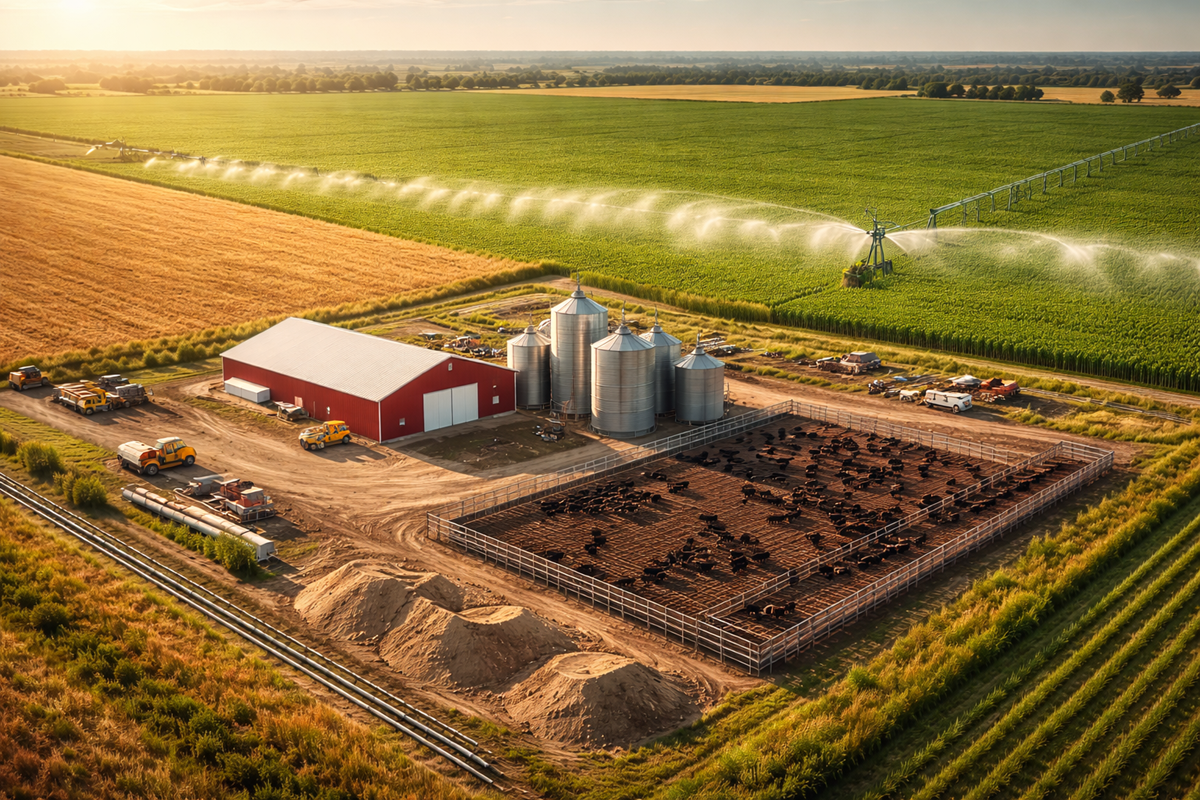
Water uncertainty does not just affect current operations. It also affects growth.
Many farms and ranches reach a point where expansion depends on confidence in water availability.
That may include:
- Expanding irrigated acreage
- Increasing livestock capacity
- Adding infrastructure
- Changing or diversifying crops
- Improving long-term operational resilience
Growth plans are only as reliable as the water that supports them.
Without understanding groundwater capacity, expansion can introduce significant financial and operational risk.
Expanding without understanding water capacity can create serious risk.
Existing wells may not support increased demand. Groundwater conditions may vary across the property. Planned investments may exceed what the land can reliably sustain.
Water planning is not just a hydrology issue — it is a critical business decision.
If expansion is part of your plan, see How Much Water Does Your Farm Actually Need?
The Cost of Waiting to Address Water Problems
Irrigating less
Shifting timing
Cutting back
Delaying expansion
Hoping conditions improve
Planning to “deal with it later”
At first, these adjustments can feel manageable.
Over time, they become costly.
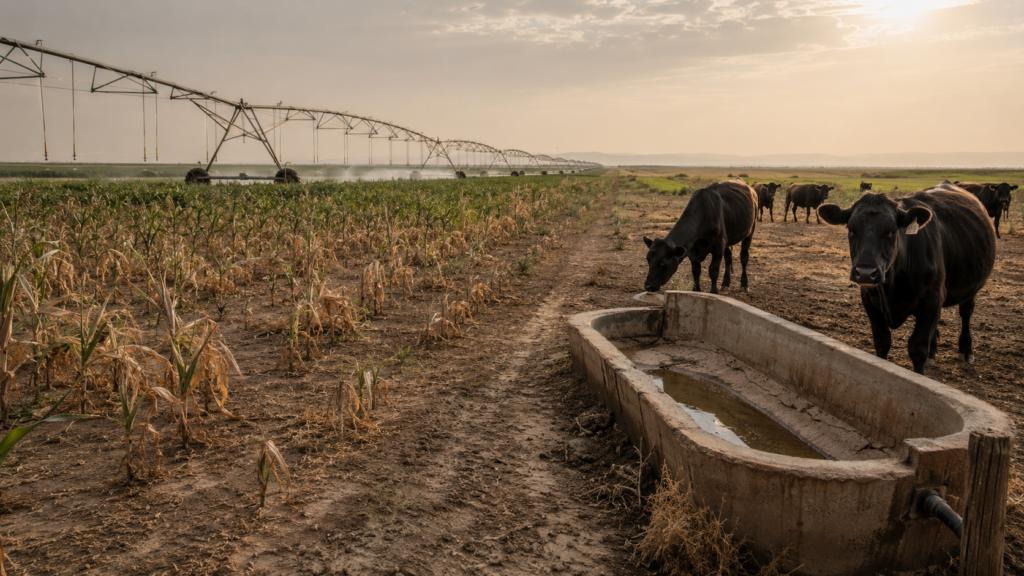
The cost of waiting often shows up as:
Reduced crop yields
Lower livestock capacity
Increased pumping costs
Emergency drilling under pressure
More expensive repeat drilling
Fewer strategic options
This is where many operations lose control of the situation.
By the time the problem feels urgent, the operation may already be absorbing hidden costs — and facing fewer, more expensive options.
This is why the cost of inaction deserves its own place in groundwater planning.
For more detail, see The Cost of Delaying Water Decisions
How to Evaluate Water Risk Before Drilling or Buying Land
Before drilling a new well — or buying land where water availability is a key factor — it helps to evaluate the risk before making a major investment.
The right questions can reveal whether a property has enough reliable groundwater to support current needs, future growth, or long-term agricultural use.
- What do existing wells on the property actually produce today?
- Are nearby wells showing signs of decline?
- Are the productive formations shallow, intermediate, or deeper?
- Is water quality consistent across the area?
- Have other operators drilled multiple wells with mixed results?
- Are there signs of regional pumping pressure or drought-related stress?
- Is the water need immediate, or is there time to plan strategically?
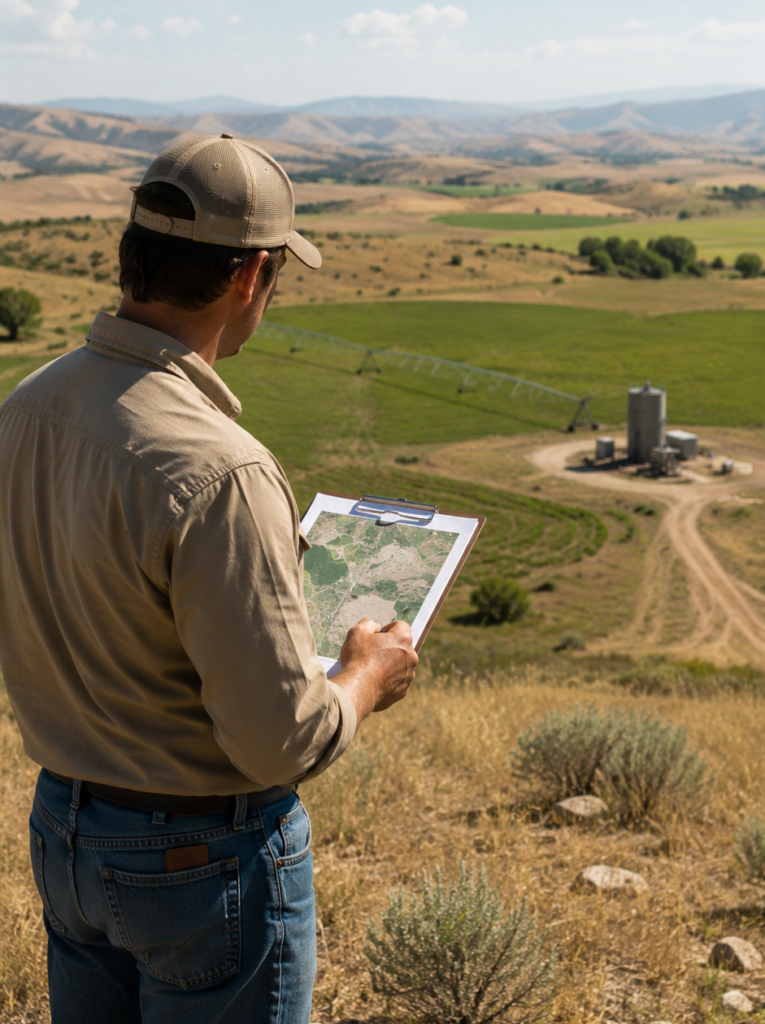
Planning ahead matters:
Once a water problem becomes urgent, drilling decisions are often made under pressure — with less time to evaluate the best options. Evaluating groundwater risk early gives landowners more time, better information, and more strategic options.
Common Mistakes That Increase Water Risk
Many costly water problems trace back to a few recurring mistakes. These issues often happen when landowners are forced to make decisions with limited information, under time pressure, or based on assumptions that no longer reflect current groundwater conditions.
Mistake 1
Drilling without enough subsurface understanding
Acting quickly can feel decisive, but uncertainty is expensive. Without better information, drilling can become guesswork.
Mistake 2
Assuming the past guarantees the future
A well that worked years ago does not prove current conditions are the same. Groundwater levels, nearby pumping, and drought pressure can change over time.
Mistake 3
Relying too heavily on nearby wells
Nearby wells can provide useful clues, but conditions can vary dramatically across short distances. What works on one property may not work on another.
Mistake 4
Waiting until the problem becomes urgent
Emergency decisions usually carry more risk. When water problems are addressed late, landowners often have fewer options and less time to evaluate the best drilling strategy.
Mistake 5
Focusing only on depth
Productive groundwater depends on formation quality, recharge, structure, and flow potential — not just drilling deeper.
Avoiding these mistakes can materially improve outcomes before drilling, expanding operations, or purchasing land.
How AquaterreX Helps Landowners Reduce Groundwater Risk
AquaterreX helps agricultural landowners better understand groundwater potential beneath their property before major drilling investments are made.
The process combines:
- geospatial analysis
- subsurface interpretation
- and on-site field verification
This approach helps landowners:
- identify promising water-bearing zones
- estimate likely depth, thickness, and potential yield
- evaluate groundwater quality potential
- and make more informed drilling decisions
Rather than relying solely on assumptions, landowners can move from reactive drilling toward more informed planning.
To learn more about the underlying service, visit Groundwater Location.
Advanced Geospatial Analysis
We use satellite imagery, geological data, and proprietary algorithms to map subsurface water potential across your land
Subsurface Data Integration
By combining multiple data sources, we build a comprehensive picture of what lies beneath — including aquifer depth and viability.
Field Verification
Our analysis is validated through on-site assessment, ensuring recommendations are grounded in real-world conditions.
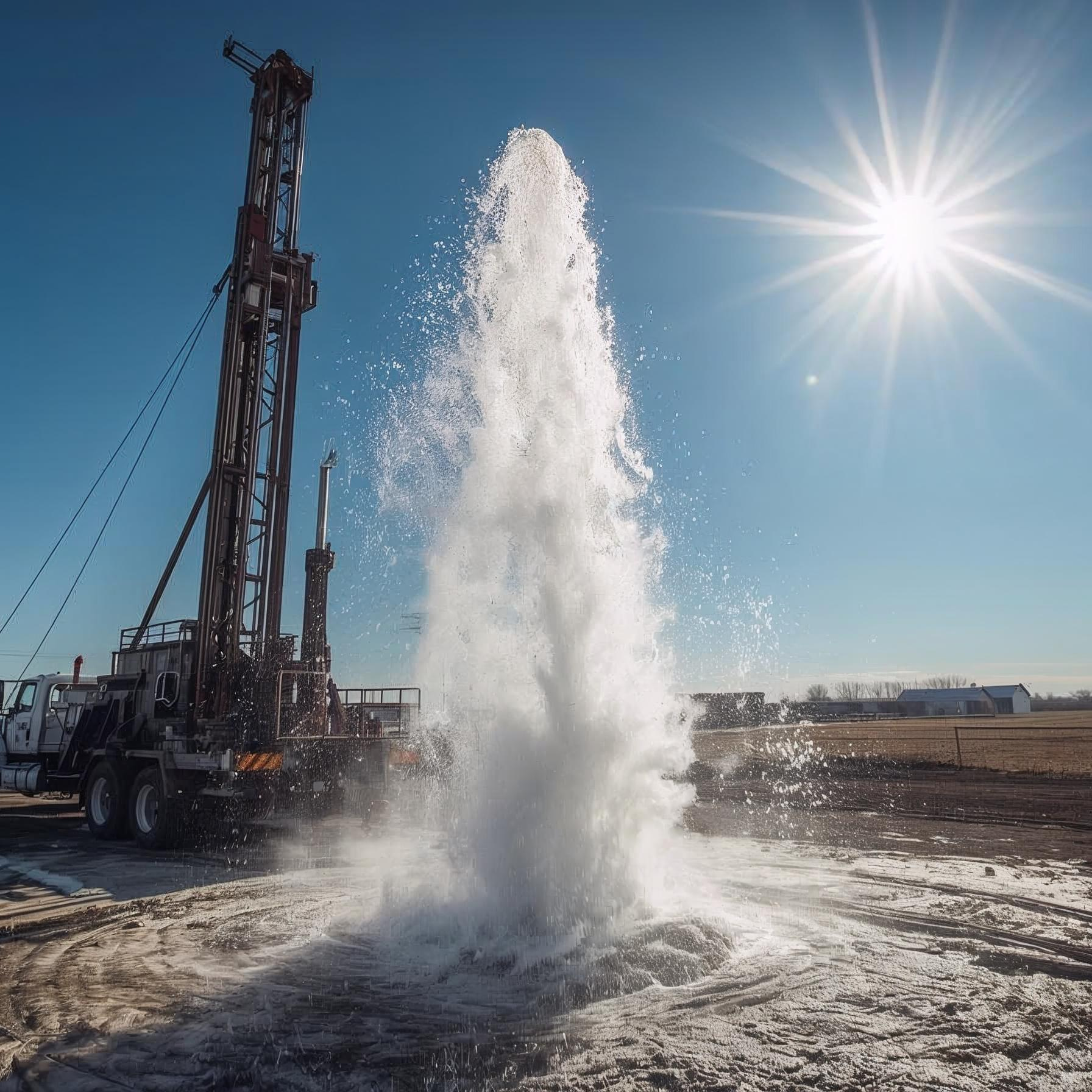
Start With a Free Groundwater Assessment
For many landowners, the hardest part is knowing where to begin.
For qualified landowners with 500+ acres: AquaterreX offers a Free Groundwater Assessment (a $1,500 value) to help evaluate water potential before major drilling decisions are made.
This is a useful first step for landowners who are:
- dealing with declining wells
- considering a new well
- evaluating land for purchase
- planning expansion
- or trying to understand whether deeper investigation makes sense
If you are facing any of these issues, starting with an assessment can help reduce uncertainty and clarify your next move.
30 recent consecutive agricultural projects with confirmed water discoveries.
Additional Resources for Farmers and Ranchers
For operators who want broader context, it can also be helpful to follow trusted information sources related to water, agriculture, drought, and land stewardship.
Useful categories to monitor include:
State groundwater boards and water districts
- Texas Water Development Board
- Arizona Department of Water Resources
- New Mexico Office of the State Engineer
- Nevada Division of Water Resources
- Oklahoma Water Resources Board
USDA and NRCS programs
Agricultural trade media
- AG Daily
- AgWeb
- AgDay (podcast)
- AgriTalk (radio show)
- Drovers
- Ag America (blog)
- Agriculture Insight (YouTube)
and organizations focused on land, conservation, and farm viability
The Ultimate Goal
Farm and ranch water problems are rarely just about one well. They are usually about uncertainty — uncertainty about what has changed, where productive water still exists, and what the next investment should be.
That uncertainty can affect operations gradually, then suddenly.
The landowner who understands groundwater risk earlier has more flexibility, better options, and a stronger chance of making confident water decisions before the situation becomes urgent.
That is ultimately the goal:
not simply drilling another well, but making a better-informed decision about where, when, and why to drill at all.
Reduce Uncertainty Before Your Next Water Investment
If groundwater conditions beneath your property are unclear, understanding subsurface conditions before drilling can help reduce financial and operational risk.
Learn how AquaterreX helps landowners assess groundwater potential before drilling.
Farm and Ranch Water Problems: Frequently Asked Questions
Common Farm Water Problems
Take a deeper dive into farm water problems with the key articles below.

Why Wells Lose Production
Why wells decline over time and how to reduce the risk of drilling another low-yield well.

Avoiding Dry or Low-Production Water Wells
How to reduce the risk of costly drilling failures.

Why Locating Groundwater Is Difficult
Why productive water zones are hard to identify beneath a specific property.

Why New Water Wells Sometimes Fail
Why some new wells produce little water and how to avoid costly drilling mistakes.

How Much Water Is Really Under Your Land?
Questions to ask before drilling, buying property, or expanding operations.

How Farm Water Demand Grows Over Time
How to plan groundwater capacity before expanding your farm or ranch.

How Drought Changes Groundwater Availability
Understand groundwater conditions before drilling a new well.

How Nearby Wells Can Affect Your Water Supply
Understand how neighboring pumping can reduce groundwater production.

Why Some New Wells Produce Less Water Than Expected
And how to avoid repeat drilling failures.
The Cost of Delaying Water Decisions
How waiting too long to evaluate groundwater can increase financial risk.